


Today is International Zebra Day, a day dedicated to celebrating our striking black-and-white friends and shining a spotlight on the importance of protecting this iconic species. It’s also a great opportunity to take a closer look at what goes on behind the scenes when it comes to caring for these incredible animals.
At Dartmoor Zoo, we’re lucky to be home to three Grant’s Zebra, a subspecies of Plain’s Zebra. To mark the occasion, we’re handing things over to Abbie, one of our keepers, who will be sharing her first-hand experiences of working with our Zebras and what it’s really like to care for them day to day.
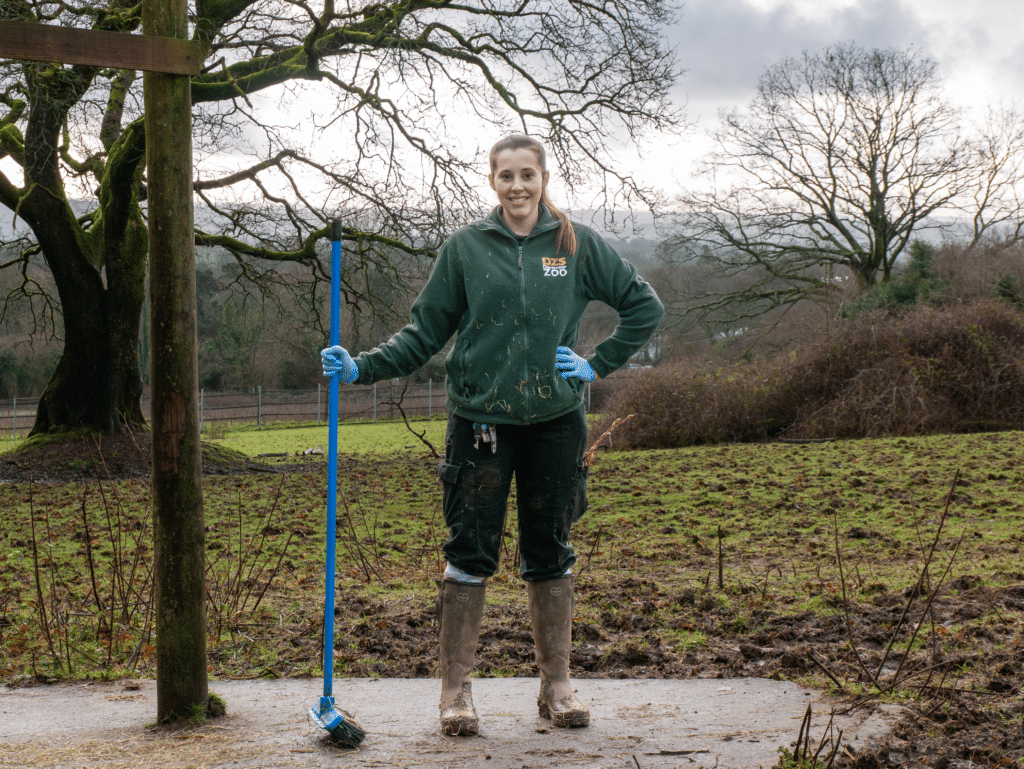
Hi, my name is Abbie and I am one of the keepers here at Dartmoor Zoo. I have been working at the Zoo for 3 years and work across multiple sections with many different animals. Out of each of the sections, my favourite is African because it has the most hoofstock animals, a huge passion of mine. So, you may be thinking what exactly is “hoofstock”? Hoofstock is a term we use to describe hooved animals like Zebras.
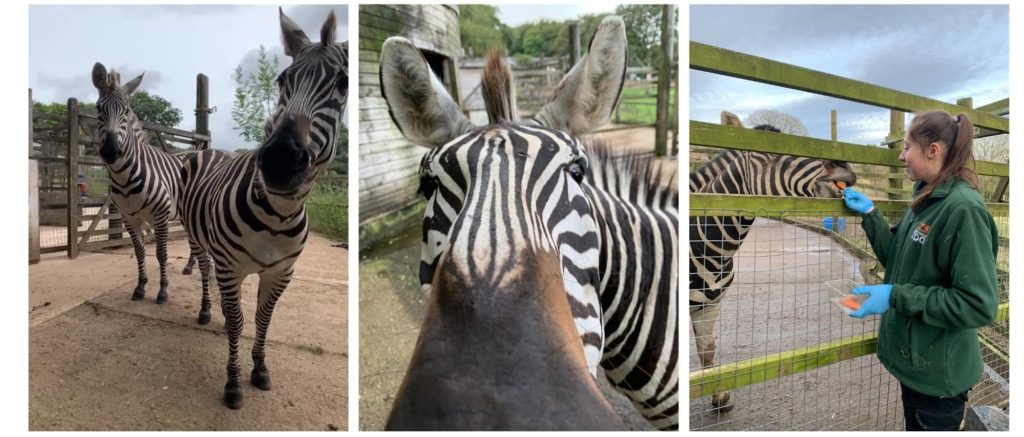
Since I have been at the Zoo, we have always housed Plain’s Zebra. There are seven different subspecies of Plain’s Zebra, and during my time here I’ve been lucky enough to work with many individuals, both our current residents and some we’ve had in the past. When I first arrived at DZS, we had three male Zebras: Parsley, Forest and Hugh. Today, we’re home to three Grant’s Zebra, Hugh, Ruby Tuesday, and a very special mention to yesterday’s birthday girl Olivia! Happy belated birthday, Olivia!
Fun fact about our girls: Olivia is Ruby Tuesday’s mum!
Meet Our Zebras
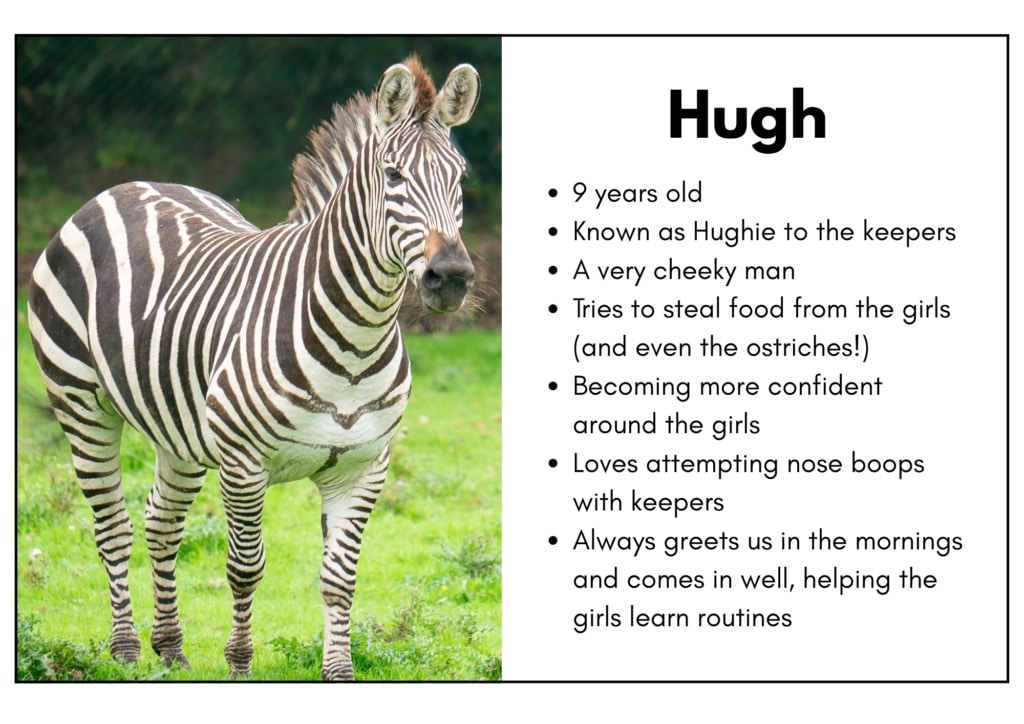
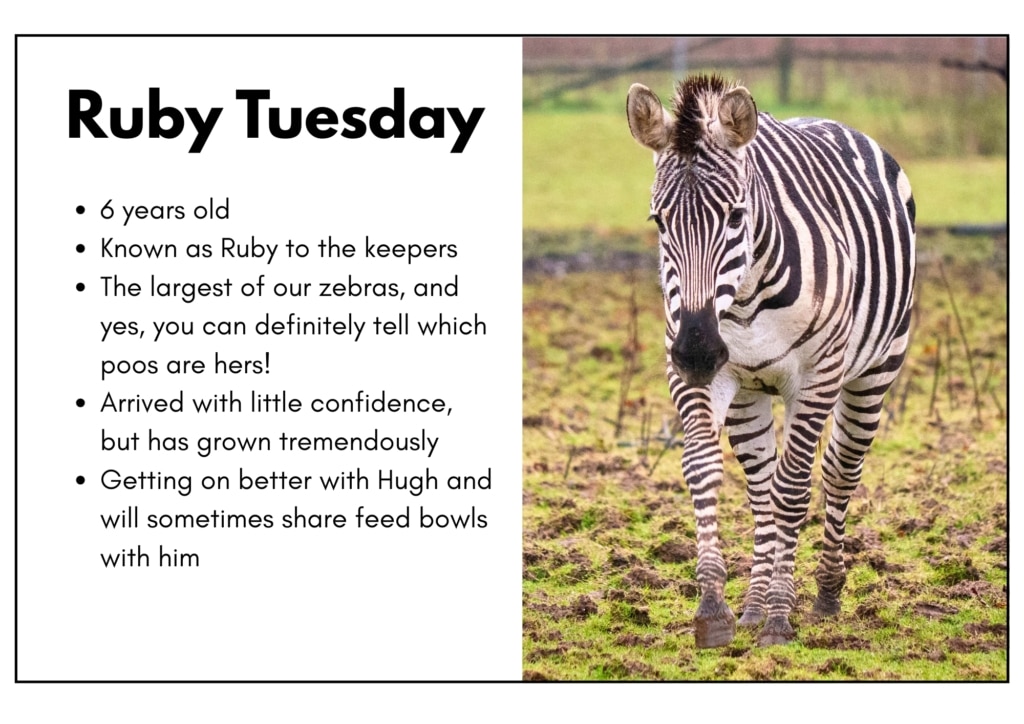
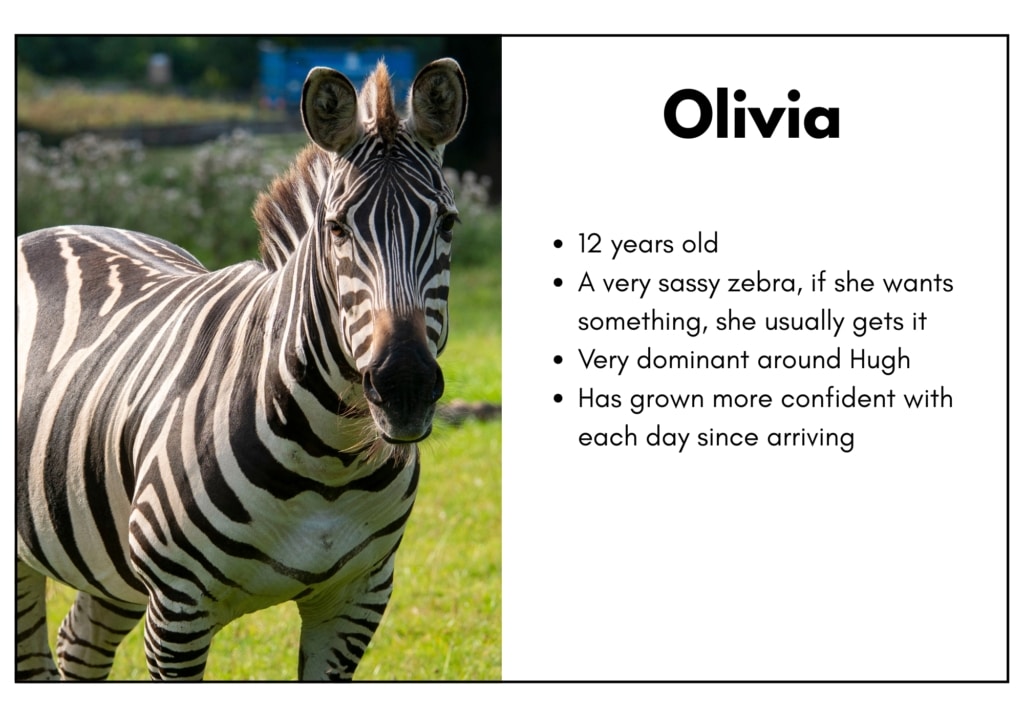
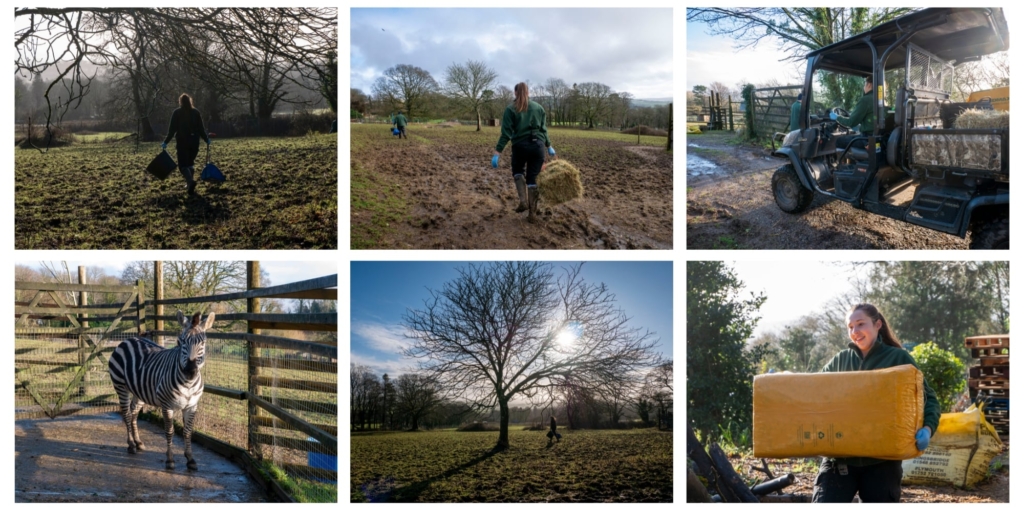
Hay is always part of the uniform when you’re a hoofstock keeper!
I like lots of things about Zebras, but if you were to ask what specifically I would have to say they are stunning animals who are really intelligent. This coupled with their individual unique personalities; is why I really enjoy working with them. No two days are the same when working with the Zebra and that in itself is really enriching for me, even though the fundamentals are the same, the variety keeps me engaged. I am incredibly lucky to work with 3 incredible Zebras every day and I truly mean it when I say that I am living my dream!
Working with Zebras sometimes presents unique challenges, which sometimes require problem solving. As Zebras are wild and can be unpredictable it is important not to become complacent when working around them because they are intelligent and have highly defensive instincts which have evolved over time from facing a lot of predation, meaning they can be quite dangerous to work with especially when in close proximity.
My top 3 Zebra Facts
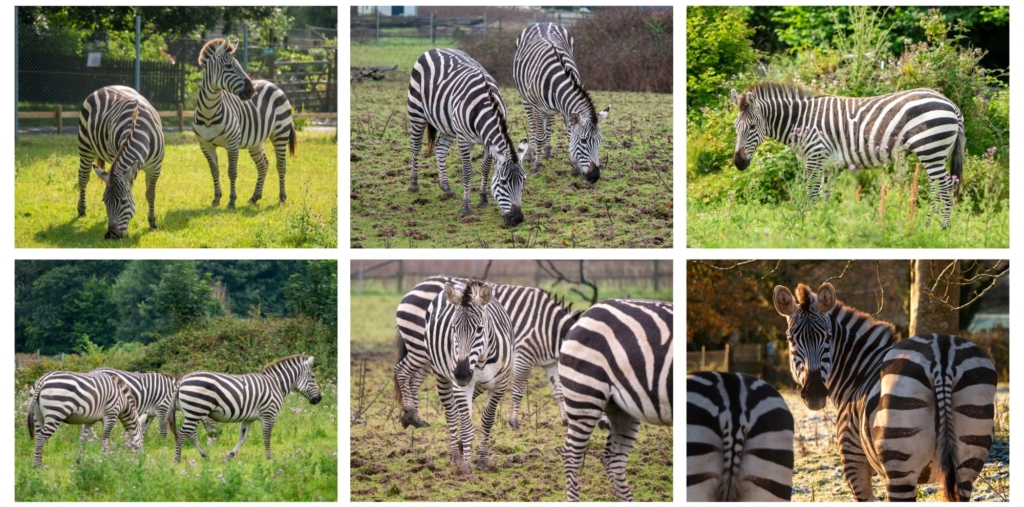
- A group of Zebra is called a dazzle – because when the herd is stood together in the African Plain’s a predator cannot pick out a single outline of 1 zebra due to their stripe patterns and being stood together – it breaks up their outline!
- Are zebras black with white stripes or white with black stripes? – they are black with white stripes! Just like Polar Bears have black skin and white fur, zebras have black skin and white stripes. The primary reason for this is to prevent biting flies, such as horse flies.
- Zebras stripe patterns are unique, like our fingerprints!
Why is International Zebra Day important?
It’s really important for Zoos to educate about Zebras because Zebras play a vital role in keeping the African Plain’s habitat biodiverse. Not only are they a fundamental species for predators such as lions and hyenas, but they also help to manage the ecosystem they live in. Being grazers, Zebra can eat long and tough grasses that other species within their ecosystem cannot. Furthermore, education helps highlight the threats Zebras face in the wild including poaching and climate change. One of their largest threats is something called habitat fragmentation. This is where large areas of habitat are broken down into smaller areas, usually caused by human activity such as building roads, infrastructure, or even agricultural purposes.
It is also important for Zoos to raise awareness of conserving Zebras because educating can inform the public of information like the fact that Zebras are not like horses, they are wild animals and can be unpredictable. Zebras are often used as a big attraction for tourists, especially during the migration, and as more and more people go to see the migration each year, education about these animals is vital to help protect them.
Today being International Zebra Day is a focal point for us to raise this awareness to help protect and conserve the species.
Advice for Aspiring Zookeepers
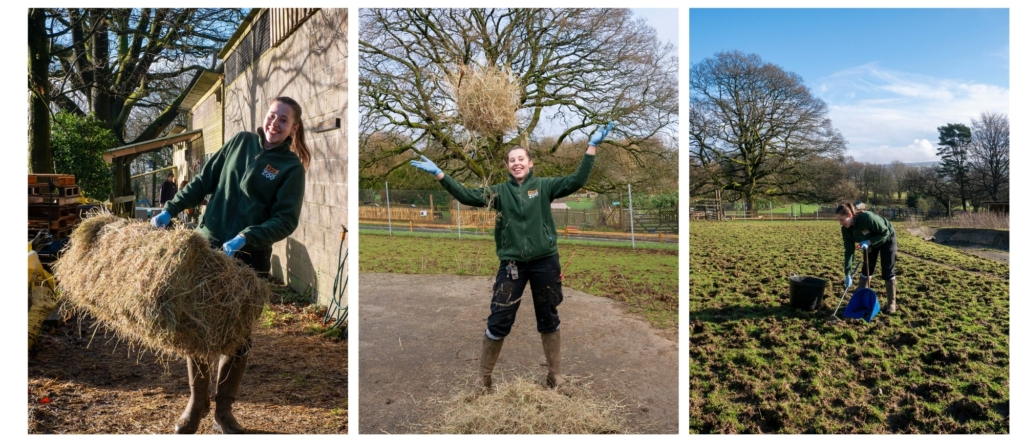
My top tips for wanting to become a zookeeper in the future are to work hard and show passion in the care for every animal you meet, and where you can – get volunteering! I always say any experience with animals is good experience. Whether that be exotic animals or domestic animals, it all helps to widen your skills and knowledge needed to become a zookeeper, and all the skills you learn are transferrable. Zookeeping isn’t just cuddling animals all day it is a very physically demanding job and includes a lot of cleaning and picking up poo, so be prepared for that! If you are determined, keep working hard, eventually you will get there, for the right person this is the best job in the world. For me this is my dream job, and I always say to people I’m so lucky I don’t feel like I work a day in my life because that’s how much I love being a zookeeper.
Thank you for joining us in celebrating these incredible creatures and supporting their future! If you’d like to help us continue our important work, please consider making a donation.